









Article
AI for Malaysian Parents and Teachers: Homework Help Without Cheating

Children and teenagers already know about AI chatbots, often before their parents do. Some use them to explain a difficult Sejarah topic. Others use them to write an entire essay in thirty seconds. The tool is the same; the effect on learning is completely different.
Banning AI rarely works for long. A better approach is teaching children how to use it as a tutor rather than a ghostwriter. This guide gives parents and teachers practical ways to do that, with prompts you can share at home or in class.

Tutor Mode Versus Answer Mode
The key idea is simple. In answer mode, the child asks "solve this question" and copies the result. In tutor mode, the child asks "explain how to approach this question step by step, but do not give me the final answer". The second version makes the child do the thinking while getting help when stuck.
You can set this up at the start of a chat with an instruction such as: "You are a patient tutor for a Form 2 student. Ask me questions to guide me. Never give the full answer unless I have tried twice." Most AI assistants follow this kind of instruction reasonably well.
Parents can sit with younger children for the first few sessions to show what good use looks like. It is similar to teaching a child how to use a library or a dictionary properly.
Useful Prompts for Students
- "Explain photosynthesis like I am 12, then quiz me with three questions."
- "Here is my essay. Do not rewrite it. List three things I can improve and why."
- "Give me five practice questions on fractions, one at a time, and tell me if my answer is right."
- "Explain this BM peribahasa and give two example sentences."
- "Make a revision timetable for SPM subjects over six weeks, with rest days."
These prompts all keep the student active. They explain, practise, plan or get feedback, rather than simply receiving a finished product. For older students, see also our list of free AI tools for students.
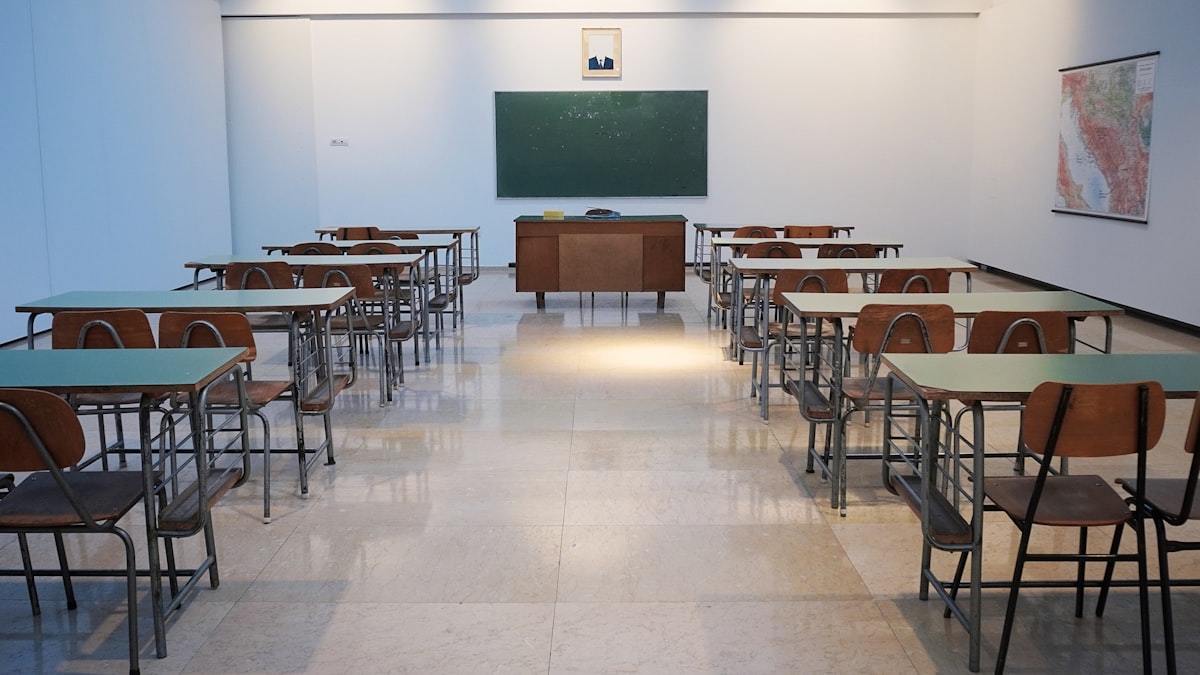
What Teachers Can Do in Class
Teachers can use AI to prepare varied practice questions, simplify reading passages for weaker readers, or create role-play scenarios for language lessons. It saves preparation time, especially when one class has a wide range of abilities.
For assessment, many teachers are shifting towards work that is harder to outsource: in-class writing, oral explanations, project logs and drafts submitted over time. Asking a student to explain their essay out loud is a quick and fair way to see whether they understand it.
Tip for teachers: set one activity where students must critique an AI answer and find its mistakes. It builds AI literacy and subject knowledge at the same time.
Safety, Privacy and Age Limits
Many AI services set minimum ages in their terms, and some require parental consent for younger teens. Check the terms of any tool before your child signs up. Keep accounts in a parent's control where possible.
Teach children not to share their full name, school, address, photos or personal problems with AI chatbots. Explain that AI can be wrong and that it is not a friend, even if it sounds friendly. Malaysia has also been discussing rules on AI chatbots and children's safety, which shows how seriously the issue is being taken.
If a child seems to be relying on a chatbot for emotional support, that is a signal to talk with them, and possibly to seek help from a qualified professional. Services such as PsyCore offer support for children and families dealing with stress and behaviour changes.

Building Good Habits at Home
- Agree on rules together: when AI is allowed and for what.
- Keep homework AI use in shared spaces, not behind closed doors.
- Ask your child to show you one thing they learned from the AI each week.
- Praise effort and understanding, not just finished work.
- Use AI yourself alongside them, so it becomes a shared tool rather than a secret.
Children copy what adults do. If parents use AI thoughtfully, checking facts and thinking critically, children are more likely to do the same.
FAQ
Should I ban my child from using AI?
A complete ban is hard to enforce. Clear rules and supervised use usually work better, especially for older children.
Can teachers tell if work was written by AI?
Detection tools are unreliable. Oral explanations, drafts and in-class work are more dependable ways to check understanding.
Is AI good for SPM revision?
It can help with explanations, practice questions and planning. Always check answers against textbooks and teacher guidance.
AI can be one of the best tutors a child has ever had, or a shortcut that skips learning entirely. The difference is in how it is used. Set it up as a tutor, keep conversations open at home, and focus on understanding over finished answers.